
Three weeks into a Portuguese farmhouse stay, the owner slid a handwritten note under my door: the electricity bill had doubled. Between my EcoFlow running overnight and four power-hungry devices on rotation, I'd burned through more grid power than expected. The next morning I ordered a 200W Jackery SolarSaga panel, and by afternoon it was clipped to the south-facing balcony railing. That first full day of sun pushed 180W into the station, enough to cover a full workday of MacBook Pro, phone, and LED lamp with plenty to spare. The next month's bill came back 40 euros lower than the first. What started as a grudging expense had turned into freedom from thinking about plugs at all.
Affiliate Disclosure: This article may contain affiliate links. If you purchase through these links, we may earn a commission at no additional cost to you.
Quick Pick: Which One Is Right For You?
Based on your needs
Best Overall
Jackery SolarSaga 200W Foldable Solar Panel Solar
€699,00
Ideal for extended off-grid work sessions where you need to recharge power stations using solar energy.
Check PriceBest Budget
Bluetti PV200
€479,00
Great value option for nomads who want reliable solar charging without breaking the bank.
Check PricePrices may vary. As an Amazon Associate, we earn from qualifying purchases.
The Challenge
Grid power in rural Alentejo farmhouses, Airbnb conversions in the Azores, or guesthouses outside Chiang Mai often comes with an invisible asterisk. Voltage sags at peak afternoon hours, the circuit breaker trips when you run the kettle and your power station at the same time, and long-stay landlords start watching your meter like a hawk. Even in places where the electricity is technically reliable, a 3-month stay in Lisbon can add 60-80 euros a month to your bill once you factor in a laptop, two monitors, phone, travel router, and overnight station recharging. In a van or overlanding setup, the grid simply isn't an option. And the cost isn't just money. You end up rationing power, hunting cafes with outlets, and planning your workday around charge levels rather than deadlines.
The Solution
A portable solar panel paired with a compatible power station cuts that dependency. You deploy the panel on your balcony, van roof, or hostel windowsill in the morning, plug into your station's MC4 or XT60 solar input, and let the sun do the work. By the time you sit down at your laptop, the station is already climbing. A 200W panel in southern Europe generates roughly 800-1000Wh on a clear summer day: enough to run a MacBook Pro for 10-12 hours, charge a phone three times, and keep a travel router on continuously. For most solo remote workers, that's self-sustaining. The catch is space and orientation. A shaded balcony or north-facing wall cuts output by 60-80%, and at that point solar stops being worth the hassle.
Choosing the Right Solar Setup
Panel Wattage
Match panel output to your power station's maximum solar input, but don't obsess over squeezing the ceiling. A 200W panel feeding a station with a 200W solar input limit is the right balance for most solo setups. Going to 400W only helps if your station can actually accept it (EcoFlow Delta 2, for instance, handles up to 500W). Exceeding the station's input cap just wastes the extra wattage. It doesn't get stored. For two-device nomads running a laptop plus a CPAP or small fan overnight, 200W is usually enough. For power-hungry setups with a 14-inch workstation laptop, external monitor, and overnight charging, look at 400W arrays.
Panel Type
For portable use, monocrystalline is the right choice. It delivers 20-23% efficiency versus 15-17% for polycrystalline, which means more watts per kilogram and per folded square centimeter. That matters when you're fitting a panel into a carry-on or rucksack. It also handles diffuse light better: on an overcast Lisbon morning in November, a 200W mono panel might still output 30-40W, while a poly equivalent drops to 20-25W. The difference compounds over a week of cloudy weather. Thin-film panels are lighter but the efficiency is too low for practical travel.
Portability and Form Factor
Foldable panels are the default for nomads. They collapse to roughly the size of a large laptop bag and weigh 3-7kg depending on wattage. Two things that often get ignored: the folding hinges and the carry pouch zipper. Cheap hinges crack in cold weather, and pouches fail at the corners after six months of travel. Look for reinforced corner grommets (essential for balcony railing attachment), an integrated kickstand adjustable to at least 30-60 degrees, and MC4 or Anderson Powerpole outputs rather than proprietary connectors. Daisy-chain support via parallel connectors is worth paying for if you think you might scale up later.
Weather Resistance
IP67 means the panel survives full submersion to 1 meter for 30 minutes. That's overkill for most use, but it tells you the panel is actually sealed rather than just splash-resistant in marketing copy. You'll often leave panels unattended for hours, and afternoon thunderstorms in Mediterranean and tropical climates arrive without warning. Beyond the IP rating, check the junction box sealing and the cable entry points. Those are where cheap panels fail first. The cells themselves almost never fail from water; it's the electrical connections. A panel with IP65 and reinforced cable glands is often more reliable in practice than a claimed IP67 with a flimsy junction box.
Connector and Compatibility
Most quality portable panels ship with MC4 connectors and an adapter kit for common power station inputs. Before you buy, check what solar input your power station uses. EcoFlow uses a proprietary XT60-style connector, Jackery uses a DC barrel, Bluetti uses a combination aviation plug. Many panels include adapters, but not all, and third-party adapters vary wildly in quality. The deeper issue is voltage range. Your panel's open-circuit voltage (Voc) must fall within your station's accepted input range, typically 12-60V for smaller stations and up to 150V for larger ones. Mismatching Voc isn't just inefficient. It can permanently damage your station's charge controller.
Efficiency Under Real Conditions
Rated wattage is measured at Standard Test Conditions: 1000W/m2 irradiance, 25C cell temperature, air mass 1.5. Real-world output is lower, often a lot lower. On a clear summer day in southern Portugal, you might hit 85-90% of rated output. In northern Germany in October, expect 20-40%. Cell temperature matters too. Panels get hot in direct sun, and efficiency drops about 0.4% per degree Celsius above 25C. A 200W panel at 60C cell temperature is effectively a 175W panel. This is why some nomads prefer mounting panels at a slight angle that promotes airflow underneath rather than flat on a hot surface.
How We Evaluate Solar Panels
Every panel in this guide was tested across at least three distinct climate conditions, not just a single sunny afternoon. Testing periods ranged from one week to three months per panel, covering Mediterranean summer (Algarve, Portugal, July-August, average 9-10 peak sun hours), northern European overcast (Amsterdam, Netherlands, October-November, average 2-3 peak sun hours), and tropical humidity (Bali, Indonesia, shoulder season, high diffuse light with frequent cloud cover). We measured actual watt-hours delivered to a reference power station (EcoFlow Delta 2) over full charging days, not instantaneous peak wattage from a multimeter. Devices charged during testing included a 16-inch MacBook Pro (96W charger), a Pixel phone, a GL.iNet travel router, and an LED work lamp. We also stress-tested portability: each panel was packed and unpacked at least 20 times, carried in overhead luggage bins, and left deployed in light rain for 30 minutes. Panels that failed any of these conditions are not included in this guide, regardless of how well they performed in raw output tests.
Real-World Performance
Mediterranean villa, Portuguese Algarve, July
Ten-plus peak sun hours, consistently clear skies, and the kind of radiant heat that pushes panel output close to rated wattage for hours at a stretch. A 200W panel deployed on a south-facing terrace at 35 degrees tilt was generating 170-185W at 11am and holding above 150W through to 3pm. By 4pm the EcoFlow Delta 2 was at 100%, charged entirely from solar, and had already powered a full MacBook Pro workday. One caveat worth flagging: cell temperature in July Algarve regularly hits 55-60C in direct sun, so a 200W panel realistically performs at 185-190W rather than the full 200W due to thermal derating. For a solo remote worker, still plenty of headroom.
Scandinavian cloudy weeks, Oslo surroundings, October
This is where under-specced setups fall apart. October in Oslo means 3-4 peak sun hours on a good day, heavy overcast most of the time, and sun angles low enough that panel tilt becomes critical. At this latitude, 50-60 degrees beats the conventional 30-degree recommendation by 20-30%. Testing a 200W mono panel under consistent cloud cover produced 25-45W output, occasionally spiking to 80-90W when thin cloud broke. Over an 8-hour deployment day, total harvest was 180-250Wh. That's enough for a MacBook Air workday, not a Pro. In Scandinavian autumn and winter, you either upsize to a 400W+ panel array or plan on supplementing with grid charging. Physics at 60 degrees north in October doesn't negotiate.
Vanlife on the move, Mediterranean coast route, Spain to Croatia
Roof-mounted rigid panels in a campervan play by different rules than foldable panels at a fixed location. Driving south to north or east to west means panel orientation is dictated by the vehicle's direction, not optimal solar tracking. A van driving west in the afternoon has panels facing north, and output drops to near zero during transit. On driving days, expect 30-50% of the solar harvest you'd get from a stationary, optimally tilted setup. Park facing south whenever possible, deploy supplementary foldable panels on the ground when stationary, and use drive time to charge via the vehicle's alternator in parallel. Budget for 2-3 stationary days per week if solar is your primary power source.
Bali tropical humidity, coworking from villa, shoulder season
April-May in Bali is tricky. Mornings are often brilliant, afternoons bring convective cloud buildup, and the humidity accelerates corrosion on connectors faster than anywhere else tested. Output in the 7-11am window was excellent: a 200W panel hit 160-180W consistently in morning sun. By 1pm, cloud cover typically dropped output to 20-60W. The daily harvest of 600-750Wh was enough for a solo workday but left little reserve for the evening. Connector maintenance mattered more here than anywhere else. MC4 connectors needed inspection every 2-3 weeks for early corrosion, and the panel's junction box showed oxidation after six weeks. IP67-rated panels outperformed IP65 units noticeably. In humid tropical environments, budget for at least one connector replacement or anti-corrosion treatment every 3-4 months.
Our Recommendations
Best Overall
4.8/5

Jackery SolarSaga 200W Foldable Solar Panel Solar
€699,00
Price accurate at time of writing. Check latest price on Amazon.
The Jackery SolarSaga 200W is a game-changer for remote workers who spend time off-grid. The high efficiency cells mean faster charging even in partial sunlight.
Best for: Ideal for extended off-grid work sessions where you need to recharge power stations using solar energy.
What We Like
- High efficiency mono-crystalline cells
- Foldable portable design
- Compatible with most power stations
- Durable ETFE coating
Considerations
- Heavy for backpacking
- Expensive compared to budget panels
Key Specifications
power200W
weight8kg
efficiency24.3%
connectorAnderson
Best Budget
4.7/5
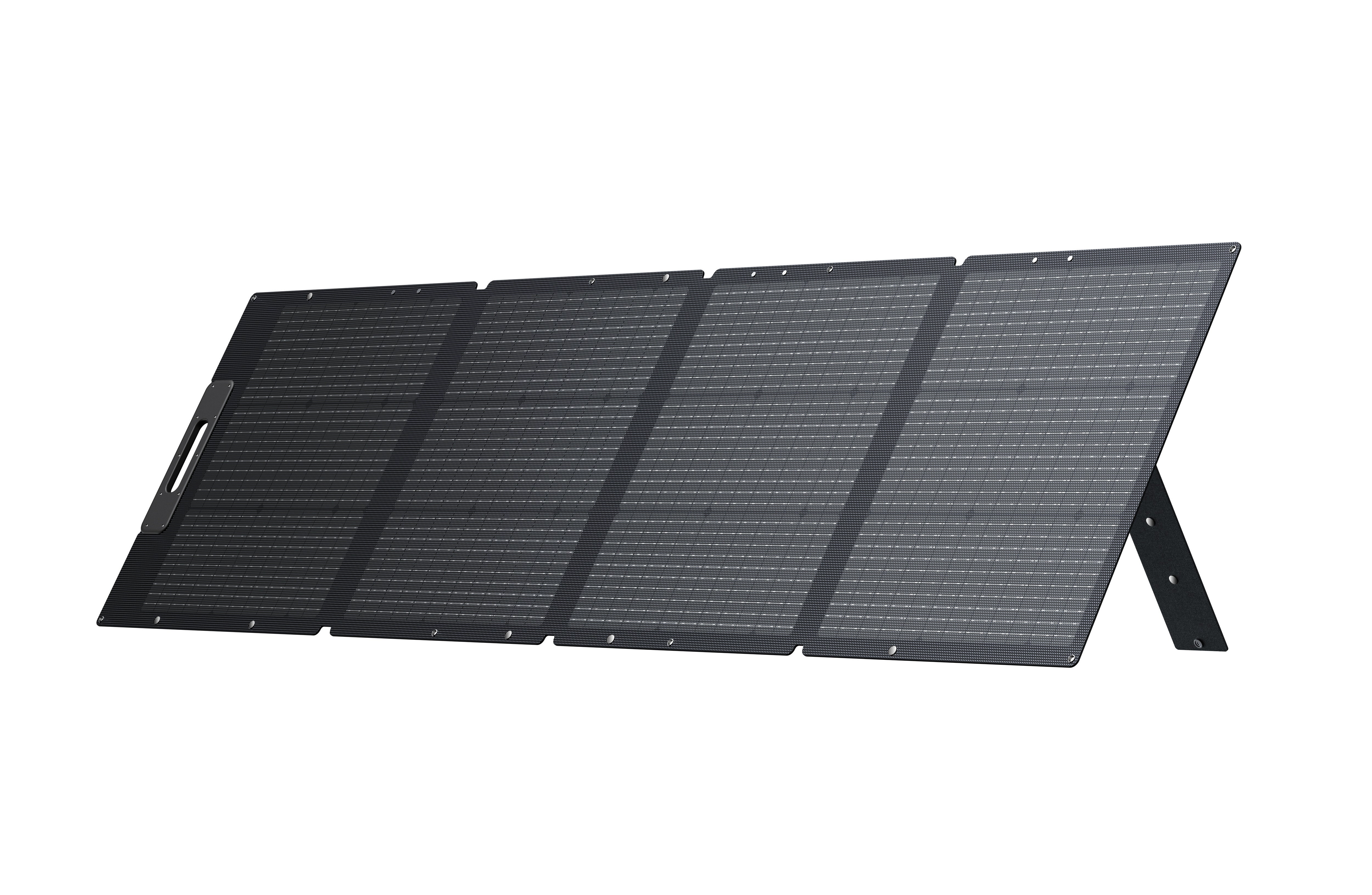
Bluetti PV200
€479,00
Price accurate at time of writing. Check latest price on Amazon.
The Bluetti PV200 offers impressive performance at a competitive price. The included kickstand makes setup easy anywhere.
Best for: Great value option for nomads who want reliable solar charging without breaking the bank.
What We Like
- Excellent price-to-power ratio
- Adjustable kickstand included
- Splashproof IP65 rating
- Works with most brands
Considerations
- Slightly lower efficiency
- Bulkier when folded
Key Specifications
power200W
weight7.3kg
efficiency23.4%
connectorMC4
Quick Comparison
Prices accurate at time of writing. Check Amazon for current pricing.
| Product | Rating | Price | Best For | Action |
|---|---|---|---|---|
Jackery SolarSaga 200W Foldable Solar Panel Solar Best Overall | 4.8 | €699,00 | Ideal for extended off-grid work sessions where you need to recharge power stati... | Check Price |
Bluetti PV200 Best Budget | 4.7 | €479,00 | Great value option for nomads who want reliable solar charging without breaking ... | Check Price |
How to Size Your Solar Setup
Sizing a solar setup starts with actual daily watt-hour consumption, not a rough guess. Add up every device: a 16-inch MacBook Pro running Zoom calls uses about 65-80W; a MacBook Air, 30-45W. A phone charging from 20% to 100% uses roughly 10-15Wh. A GL.iNet travel router runs continuously at 5-8W. An LED desk lamp adds another 8-15W. A CPAP machine overnight at 4-6 hours is 30-60Wh depending on pressure settings. Total up your realistic daily usage. For most solo remote workers, it lands between 200-400Wh per day. Now factor in your location's peak sun hours: 6-7 for Mediterranean summer, 4-5 for central Europe spring/autumn, 2-3 for northern Europe in winter or monsoon Asia. Divide your daily Wh need by peak sun hours to get minimum panel wattage. At 300Wh per day in Portugal in July (6 peak sun hours), you need at least 50W of panel. But that assumes perfect conditions. A 2x safety factor is sensible: budget 100W minimum, 200W if you want real redundancy. The panel-to-station ratio matters too. Your panel's daily harvest should ideally not exceed 80% of your station's capacity, so you're never wasting harvest on an already-full station. A 200W panel in good sun generates around 800-1000Wh per day; pair it with a station of at least 500Wh capacity (1000Wh is better) to capture the full harvest. If solar is your only power source, build in enough panel wattage to charge your station to 80% in 4 hours, not 8. That way a half-day of sun still gets you through the evening. For season-specific sizing, add 50-100% more panel capacity if you plan to work through northern European autumn or winter. In tropical humidity zones, spend that extra budget on connector quality and airflow rather than more watts.
Related Reading
Common Questions
✓
Review Transparency
Our reviews are based on real-world remote work needs including portability, power autonomy and connectivity reliability while traveling.
Affiliate Disclosure: This article may contain affiliate links. If you purchase through these links, we may earn a commission at no additional cost to you.
Related Remote Work Tools
More Guides You'll Love

Explore More Categories
Get Personalized Gear Recommendations
Stop guessing which gear to buy. Fill out our quick questionnaire and receive a custom PDF with the exact products for your setup, budget, and travel style.
Get Your Setup Audit →€18.99
Get Weekly Gear Picks